Showing posts with label Poetry. Show all posts

Wednesday, February 06, 2019

Jabberwocky & Carroll

Jabberwocky Basics:
PORTMANTEAU: Lewis Carroll's famous story Jabberwocky is told in the form of a poem. This seemingly nonsensical tale contains a plethora of original and oddly archaic words. Some of the words coined by Carroll fall into the category of "portmanteau" words.
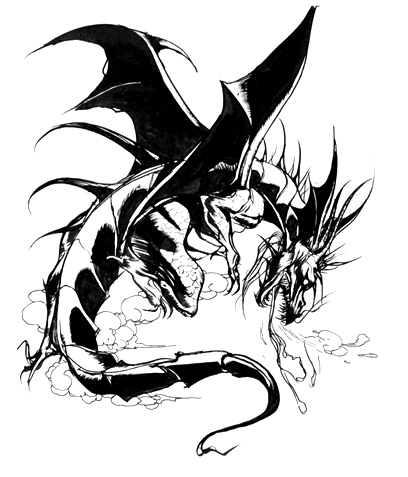
BILDUNGSROMAN: Jabberwocky is a "coming of age" story In it, a young son sets off into the forest to hunt the fearsome "Jabberwock," a ravening dragon. He succeeds in overcoming his fear and slays the beast, and he brings its head back to show his father, who commends him on his prowess, expresses his love, and gives him a big hug. 
QUATRAIN: Carroll’s poem is written in the form of a ballad with metre traditionally used for poems telling an "overcoming the monster" story. This type of ballad uses the four-line stanza, or quatrain form. Note also that there is a repeating of the opening stanza in the closing stanza.  <----classic clincher="" iew="" nbsp="" span="" topic="">
¹ Bildungsroman or coming-of-age story is a literary genre that focuses on the psychological and moral growth of the protagonist from youth to adulthood (coming of age), in which character change is extremely important.
² portmanteau word is a linguistic blend of words, in which parts of multiple words, or their phones (sounds), and their meanings are combined into a new word.

Lewis Carroll created a new kind of children’s literature that was sheer fun in the most
serious sense; its combination of fantasy, humor, and wordplay stimulated the mind and the imagination. Jabberwocky is but a small, albeit powerful, example of this. In rejecting the rational, moralistic approach of the children’s literature of the eighteenth and nineteenth centuries, Carroll turned the trend toward lesson-free imaginative literature in the twentieth.
In the 20th and 21st centuries Carroll’s books have become the territory of adults. Adults from a considerable range of intellectual disciplines have found Carroll's writing to be filled with intrigue and depth. Physicists, psychologists, philosophers, linguists, and computer scientists, as well as mathematicians and literary critics, have written about or in response to his work. 
In the twentieth century, his view of the world as a fascinating if unsolvable puzzle continued to grow on readers, presenting a difficulty in classifying his literary influence. 
Theoretically, “nonsense” is humor finds its equivalent in Symbolist poetry or abstract painting.  Function and/or content take a back seat to the definite play of verbal surfaces and textures.    
As nonsense’s purest and best practitioner, Carroll is a forerunner of Surrealism, Dadaism, and similar schools. Certainly, Carroll has made connections, directly or indirectly, with the most important of the modernists and postmodernists. 
T. S. Eliot, James Joyce, Franz Kafka, Wallace Stevens, Jorge Luis Borges, and Vladimir Nabokov all owe something to the nonsense perspective: alinear structure, the play of intellectual wit, the view of literature as a game of language, and the concept of autonomous art.


sources: 
https://www.enotes.com/topics/lewis-carroll/in-depth
https://interestingliterature.com/2016/01/22/a-short-analysis-of-jabberwocky-by-lewis-carroll/

Thursday, December 28, 2017

Hiding (One of my Favorite Childhood Poems)

Hiding by Dorothy Keeley Aldis 1896 -1966


I'm hiding, I'm hiding
And no one knows where;
For all they can see is my
Toes and my hair

And I just heard my father
Say to my mother -
"But, darling, he must be
Somewhere or other;

Have you looked in the inkwell?"
And Mother said, "Where?"
"In the INKWEL?"said Father. But
I was not there.

Then "Wait!" cried my mother —
"I think that I see
Him under the carpet." But
It was not me.

"Inside the mirror's
A pretty good place."
Said Father and looked, but saw
Only his face.

"We've hunted," sighed Mother,
"As hard as we could
And I am so afraid that we've
Lost him for good."

Then I laughed out aloud
And I wiggled my toes
And Father said —"Look, dear,
I wonder if those

Toes could be Benny's?
There are ten of them, see?"
And they WERE so surprised to find
Out it was me!

More great poems!


Sunday, August 22, 2010

Billy Collins' Litany - Recited by a 3 year old


The author's reading (and explanation - quite funny!)
Note:
 You are the bread and the knife,
        The crystal goblet and the wine...
        -Jacques Crickillon


Tuesday, January 27, 2009

A Joan Walsh Anglund Poem


A bird does not sing because it has an answer

It sings because it has a song.


graphics source: A Brush With Color

Saturday, July 05, 2008

I Went to the Woods Because


Photo of replica of Thoreau's cabin: image by FourPeaks

I went to the woods because I wanted to live deliberately,
to front only the essential facts of life.
And see if I could not learn what it had to teach
and not, when I came to die,
disover that I had not lived.
-Henry David Thoreau in Walden

It was on July 4th, 1845 that Henry David Thoreau took up residence in his cabin on Walden Pond. Thoreau spent under $30.00 to build his modest home whose footprint was 10'x15'. With only two knives and forks, one spoon, three plates and a single cup he wasn't planning on doing a lot of entertaining! In his garden he raised beans. Indeed: a simple life...

Take a few moments with this simple poem . . . . Have you found Walden where you are?

Going To Walden

It isn't very far as highways lie.
I might be back by nightfall, having seen
The rough pines, and the stones, and the clear water.
Friends argue that I might be wiser for it.
They do not hear that far-off Yankee whisper:
How dull we grow from hurrying here and there!

Many have gone, and think me half a fool
To miss a day away in the cool country.
Maybe. But in a book I read and cherish,
Going to Walden is not so easy a thing
As a green visit. It is the slow and difficult
Trick of living, and finding it where you are.

-Mary Oliver in the collection, New and Selected Poems: Volume One

Thank you and H/T to A Concord Pastor Comments for this post. He posted it at his blog on July 4th, 2008. I liked it so much I knew I wanted to save it here at Spot Those Turns. Full credit goes to Father Fleming.

Friday, February 22, 2008

The Winners; Cinquain Poetry

My 5th graders wrote cinquain poems today. Here are two that stood out! These students followed directions, were thoughtful in their writing and worked diligently to finish in the alotted time frame.

Cassie's poem

Victor
feisty, playful

eating, playing, sleeping

- a special cat that's always there
friend


Jordan's poem

Dragons
enormous, strong

flying, fire-breathing, eating
- a creature that never was

snake


Cinquain Poem: pronounced "cin-kain"- a diamond-shaped poem with 5 lines
Directions for writing a cinquain poem can be found at: Spot Those Turns

Thursday, November 08, 2007

A Blade of Grass

Hat Tip to: AWTG

I love Kahill Gibran, too.


A blade of grass

Said a blade of grass to an autumn leaf, "You make such a noise falling! You scatter all my winter dreams."

Said the leaf indignant, "Low-born and low-dwelling! Songless, peevish thing! You live not in the upper air and you cannot tell the sound of singing."

Then the autumn leaf lay down upon the earth and slept. And when spring came she waked again -- and she was a blade of grass.

And when it was autumn and her winter sleep was upon her, and above her through all the air the leaves were falling, she muttered to herself, "O these autumn leaves! They make such a noise! They scatter all my winter dreams."


The Madman Chapter 30

Monday, June 25, 2007

Kahil Gibran

My Mom loved poetry. She would often read out loud to me. I can hear her voice in my memory to this day. I liked one author in particular. I remember asking my Mom to read me poetry by Brawn. She looked at me with such a puzzled expression. . . She asked me if I knew the poet's whole name. I said, "Sure, it's Kahilga. You know, Mom, Kahilga Brawn."

She smiled and hugged me and read from The Prophet. Then she showed me the author's name. Kahil Gibran. She did all of this without laughing at me or letting me feel silly in anyway.
What a perfect Mom!

"His power came from some great reservoir of spiritual life else it could not have been so universal and so potent, but the majesty and beauty of the language with which he clothed it were all his own." -- Claude Bragdon